Torrevieja Beaches: Complete Guide to Every Beach
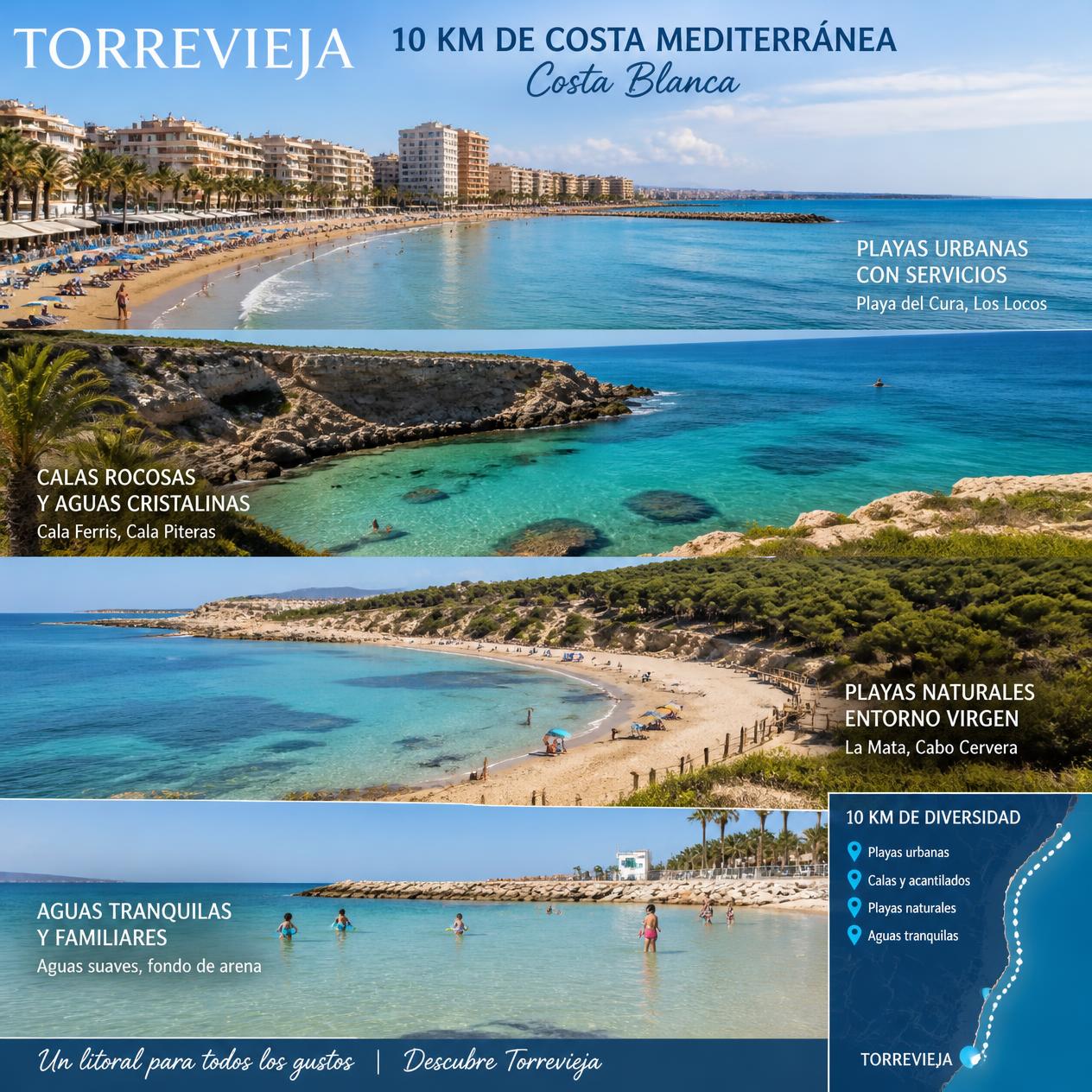
Torrevieja has a surprisingly varied coastline for a city its size. Within a 10-kilometre stretch, you’ll find wide urban beaches with full facilities, quiet rocky coves with crystal-clear water, natural beaches backed by pine forest, and family-friendly stretches of shallow, calm Mediterranean sea. This guide covers every beach in and around Torrevieja so you can find the right one for your day.
Overview: Torrevieja’s Beaches at a Glance
| Beach | Type | Best for | Distance from centre |
|---|---|---|---|
| Playa del Cura | Urban, sandy | All-round, families | 5 min walk |
| Playa de los Náufragos | Urban, sandy | Families, calm water | 10 min walk |
| Playa de los Locos | Semi-urban, sandy | Local atmosphere, sunsets | 15 min walk |
| Cala Ferris | Rocky cove | Snorkelling, couples | 20 min walk / 5 min drive |
| Cala de la Zorra | Rocky cove | Swimming, quiet | 10 min drive |
| Playa del Acequión | Urban, sandy | Watersports | 5 min walk |
| La Mata beach | Natural, sandy | Nature, space, families | 10 min drive |
| Punta Prima beach | Resort, sandy | Families, beach bars | 15 min drive |
Playa del Cura
Playa del Cura is Torrevieja’s main beach and the one most visitors head to first. It sits right at the edge of the city centre, a 5-minute walk from the port and the main paseo, and is wide, well-maintained, and fully equipped with everything you need for a comfortable beach day.
What it’s like: A wide, crescent-shaped beach of golden-grey sand, around 500 metres long. The water is calm and relatively shallow close to shore, shelving gently — good for children. The seafloor is mostly sandy with occasional rocks at the far ends.
Facilities: Sunbeds and parasols for hire (expect to pay around €10–12 for two sunbeds and a parasol), showers, toilets, disabled access ramps, lifeguards in summer, and a line of chiringuitos (beach bars) and restaurants along the promenade behind the beach.
When it gets busy: July and August can be very crowded, particularly on weekends. Arrive before 10am to claim a good spot. In June and September it’s considerably quieter but still warm enough to swim comfortably.
Blue Flag status: Playa del Cura holds a Blue Flag award, recognising the quality of the water, safety standards, and facilities.
Playa de los Náufragos (Shipwreck Beach)
Just south of Playa del Cura, separated by the Paseo Juan Aparicio promenade, Playa de los Náufragos is slightly quieter and arguably more attractive. Its name — Shipwreck Beach — comes from a 19th-century maritime disaster, and a small monument near the beach commemorates the event.
What it’s like: A long, gently curving beach of fine golden sand, approximately 900 metres long. The sea is exceptionally calm here — calmer even than Playa del Cura — making it one of the best beaches on the Costa Blanca for young children and nervous swimmers. The water is clear and warm from June through October.
Facilities: Sunbed and parasol hire, showers, toilets, lifeguards, disabled access, and several beach restaurants along the promenade. Slightly fewer facilities than Playa del Cura but also slightly less crowded.
Local tip: The beach restaurants here, particularly those at the southern end near the Paseo Vista Alegre, serve some of the best value seafood lunches in Torrevieja. Look for the daily fresh fish on the specials board.
Blue Flag status: Yes.
Playa de los Locos (Crazy Beach)
Despite its name, Playa de los Locos is not wild or crazy — the name is a historical reference to a former asylum that once stood nearby. It’s actually a relaxed, characterful beach that’s a local favourite precisely because it attracts fewer tourists than the city centre beaches.
What it’s like: A medium-sized sandy beach of around 400 metres, slightly wilder in feel than Playa del Cura, with a more natural backdrop and a small headland at one end. The sea here is slightly more exposed, which means occasional small waves — pleasant for those who like a bit of movement in the water.
Facilities: A small chiringuito that becomes lively on summer evenings, showers, and basic toilets. Less commercialised than the city centre beaches — no rows of sunbed hire here, just bring your own towel and umbrella.
Best for: Evening visits. The sunsets from Playa de los Locos are spectacular — the beach faces almost due west and has an unobstructed view of the sun setting over the Mediterranean. Go with a cold drink and stay for the show.
Getting there: About 15 minutes on foot south along the promenade from the city centre, or a short bus/taxi ride.
Cala Ferris
Cala Ferris is Torrevieja’s hidden gem — a small rocky cove tucked between two headlands, about 20 minutes on foot south of the city centre. It requires a short downhill walk to reach, which keeps it quieter than the main beaches.
What it’s like: A narrow rocky cove about 100 metres wide, with a small sandy section and clear, deep turquoise water. The rocks are easy to enter from and the water depth drops quickly — perfect for snorkelling. Underwater visibility is excellent, and you’ll commonly see sea bream, wrasse, octopus, and sea urchins.
Facilities: Almost none — no sunbed hire, no beach bar (though there’s a restaurant at the top of the cliff). Bring everything you need with you, including water shoes if you have them, as the rocks can be slippery.
Best for: Snorkelling, swimming in clear water, couples looking for a quieter spot away from the crowds.
Parking: Limited free street parking nearby. In summer, arrive early.
Cala de la Zorra
Further south along the coast, Cala de la Zorra is another small cove, more sheltered than Cala Ferris and with a slightly larger sandy area. It’s popular with local families and has a calm, community atmosphere.
What it’s like: A small cove of fine sand and pebble with clear, sheltered water. The surrounding rocks provide natural windbreaks and shade in the afternoon. Popular for snorkelling as well as swimming.
Facilities: Basic — showers only. No sunbed hire. A small beach bar operates in summer. Parking nearby.
Getting there: About 10 minutes by car south of Torrevieja centre, just past Cabo Cervera. Not easily accessible on foot from the city.
Playa del Acequión
Playa del Acequión is the beach directly north of the port, separated from Playa del Cura by the harbour area. It’s slightly less attractive than the southern beaches but convenient for the city centre and popular with watersports enthusiasts.
What it’s like: A narrow urban beach of dark sand, approximately 600 metres long. The sand is coarser and darker than the golden beaches to the south. Water quality is good.
Facilities: Sunbed hire, showers, watersports equipment hire (kayaks, pedalos, paddleboards), and several beach bars. The Club Náutico (yacht club) is at one end.
Best for: Watersports, convenient city-centre access, watching the boats come and go from the port.
La Mata Beach
La Mata is a completely different beach experience from the city beaches. It lies 7 kilometres north of Torrevieja centre, on the northern edge of the natural park, and is one of the longest and most natural beaches on the Costa Blanca.
What it’s like: A wide, straight beach of fine golden sand stretching for over 3 kilometres, backed by the natural park and pine trees rather than buildings. The dunes behind the beach are part of a protected habitat. The sea is calm and shallow — ideal for families with young children. The setting feels completely natural and unhurried.
Facilities: Several chiringuitos and restaurants in the La Mata village area at the southern end. Beach showers. Sunbed hire available near the village but not along the full length of the beach.
Wildlife: La Mata beach borders the Laguna de la Mata lagoon, which means flamingos and other wading birds are occasionally visible in the distance from the beach. A genuinely unique experience.
Getting there: About 10 minutes by car from Torrevieja centre. There is a local bus service in summer. Parking is available near La Mata village.
Best for: Families who want space, nature lovers, those seeking a quieter beach experience away from the city.
Punta Prima Beach
Punta Prima is a small coastal resort just north of Torrevieja, technically its own entity but effectively part of the greater Torrevieja area. It has its own beach, a collection of restaurants and bars, and a relaxed, residential atmosphere.
What it’s like: A compact, sheltered sandy beach about 250 metres long with calm, clear water. Less spectacular than La Mata but very comfortable, well-maintained, and popular with both British expats and Spanish families.
Facilities: Good — sunbed hire, showers, several beach restaurants and bars directly on the sand. The Playa de los Balcones hotel overlooks the beach.
Getting there: About 15 minutes by car north of Torrevieja, just past the La Zenia urbanisation.
Sea Conditions and Swimming Safety
The Costa Blanca enjoys generally calm sea conditions compared to Spain’s Atlantic coast or northern shores. A few things to know:
Flag system: All Torrevieja’s main beaches use the standard Spanish flag system — green flag means safe to swim, yellow means caution (currents or conditions), red means no swimming. Always check the flag before entering the water.
Jellyfish: Jellyfish (medusas) occasionally appear on Torrevieja’s beaches, particularly in late summer and after storms. Local councils monitor and remove them where possible. Check locally before swimming if you’re concerned.
Water temperature: The Mediterranean around Torrevieja reaches 26–28°C at peak summer (August). It’s comfortably warm enough to swim from late May through October. In winter, water temperatures drop to around 14–16°C — cold for most people but not unusual for year-round wild swimmers.
Currents: The main city beaches have very gentle currents and are safe for all swimmers. The coves (Cala Ferris, Cala de la Zorra) can have slightly stronger currents in certain weather conditions — exercise more caution at these spots.
Beach Facilities Summary
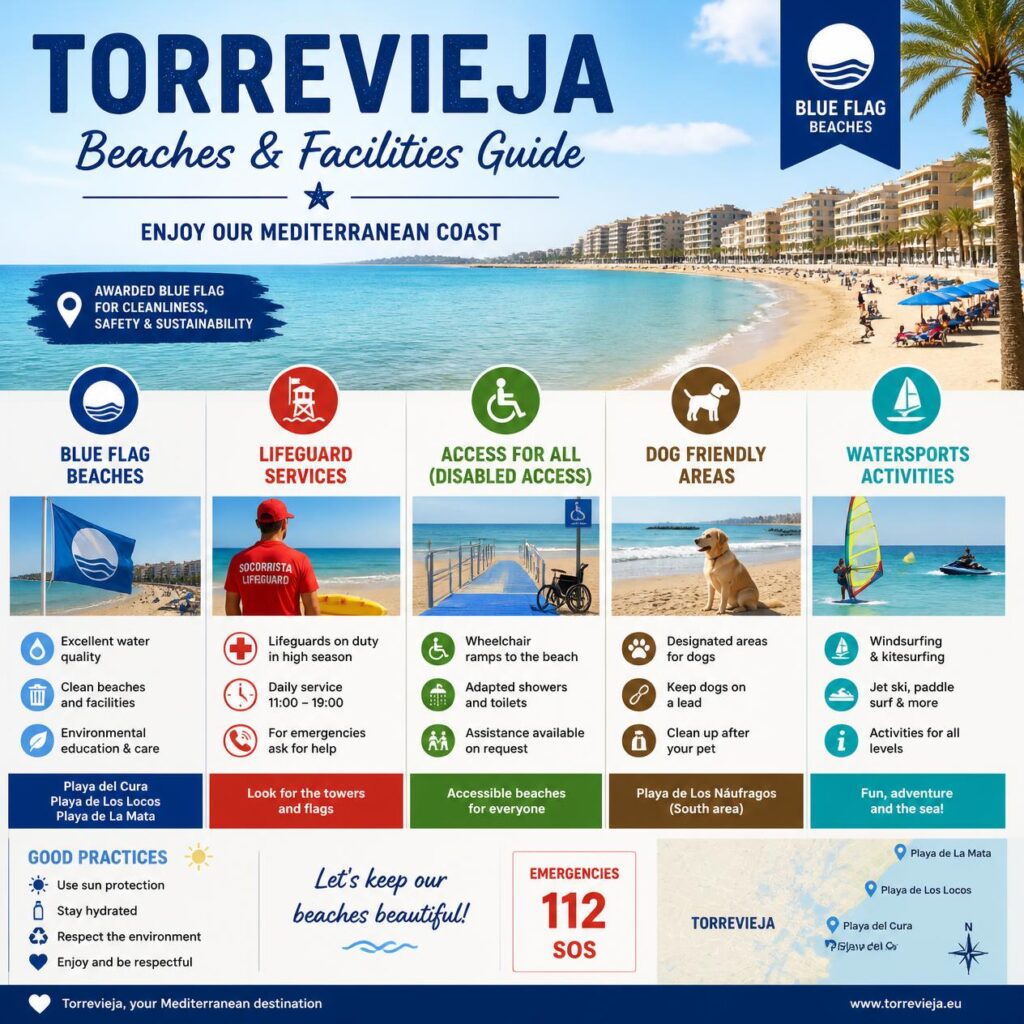
Blue Flag beaches: Playa del Cura, Playa de los Náufragos, La Mata
Lifeguards (summer): All main city beaches and La Mata
Disabled access: Playa del Cura and Playa de los Náufragos have adapted access ramps and amphibious wheelchairs available on request in summer
Dogs: Most Torrevieja beaches do not allow dogs during the main summer season (June–September). There is a designated dog beach at a section of Playa del Acequión — check current local regulations as these can change.
Watersports hire: Playa del Acequión and Playa del Cura
Practical Tips for Visiting Torrevieja’s Beaches
Arrive early in summer. Between July and mid-August, the main beaches fill up by 10–11am on weekends. Weekday mornings are considerably quieter.
Bring cash. Many beach bars and sunbed hire operators prefer cash, though cards are increasingly accepted.
Sun protection is essential. The Torrevieja sun is fierce from June through September. SPF 50, hats, and shade are not optional — they’re necessary. The UV index regularly hits 8–10 in summer.
Parking. Free parking is available near most beaches but gets scarce in peak summer. The blue-zone paid parking near the city beaches is well-signposted and usually costs €1–2 per hour. Alternatively, park slightly further from the centre and walk — most beaches are within 15 minutes on foot of each other.
Water. Bring plenty of drinking water, particularly for visits to the coves which have no facilities.
Frequently Asked Questions
Which is the best beach in Torrevieja? For facilities and convenience, Playa del Cura. For families with young children, Playa de los Náufragos. For natural beauty and space, La Mata. For snorkelling, Cala Ferris.
Are Torrevieja’s beaches safe? Yes — all the main beaches have lifeguards in summer and are monitored for water quality. The Blue Flag beaches meet strict European standards.
Is the sea warm enough to swim in October? Yes, water temperatures in October are typically 22–24°C — very comfortable for swimming. October is actually one of the best months to visit, with warm sea, lower air temperatures than summer, and far fewer crowds.
Is there a nudist beach near Torrevieja? There are designated nudist sections at some beaches in the surrounding area. Check locally for current designated spots, as these change.
How far are the beaches from the city centre? Playa del Cura and Playa de los Náufragos are 5–10 minutes on foot from the city centre. La Mata and Punta Prima require a car or bus — about 10–15 minutes.