Las Salinas de Torrevieja
Complete Guide to the Natural Park
The salt lakes of Torrevieja are one of the most extraordinary natural landscapes in Spain — and one of the most overlooked. While the pink lake draws most of the attention, the full natural park that surrounds both lagoons is a remarkable place: a protected wetland of international importance, home to flamingos, chameleons, and over 200 bird species, set against the backdrop of one of Europe’s largest salt production operations. This guide covers everything you need to know to make the most of a visit.
What is the Salinas de Torrevieja Natural Park?
The Parque Natural de las Lagunas de la Mata y Torrevieja is a protected natural area covering 3,743 hectares on the southern Costa Blanca. It encompasses two large salt lagoons — the Laguna de Torrevieja to the south and the Laguna de la Mata to the north — connected by a canal, along with the salt flats, coastal dunes, pine forests, and agricultural land that surround them.
The park was declared a natural park by the Valencian regional government in 1988 and is also designated as a Ramsar wetland site — an international designation recognising its importance as a habitat for waterbirds. It is one of the most significant wetland areas in the western Mediterranean.
The two lagoons look similar on a map but are very different in character. The Laguna de Torrevieja is an active industrial salt lake — hypersaline, managed by Salinera Española, and not accessible to the public beyond the road viewpoints. The Laguna de la Mata is a natural lagoon with walking trails, a visitor centre, and direct public access, and is the focus of most wildlife observation and recreational use.
The Pink Lake: Laguna de Torrevieja
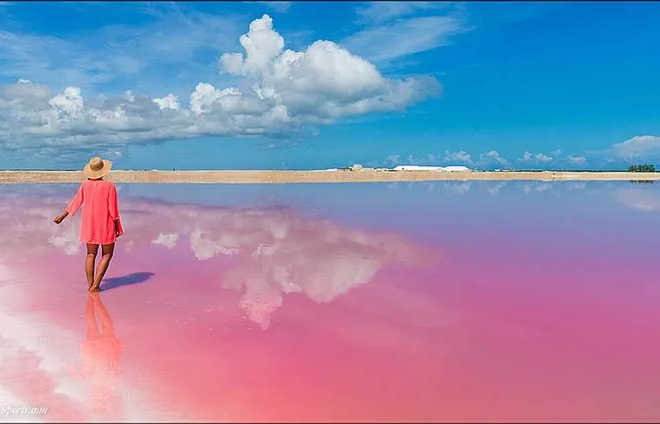
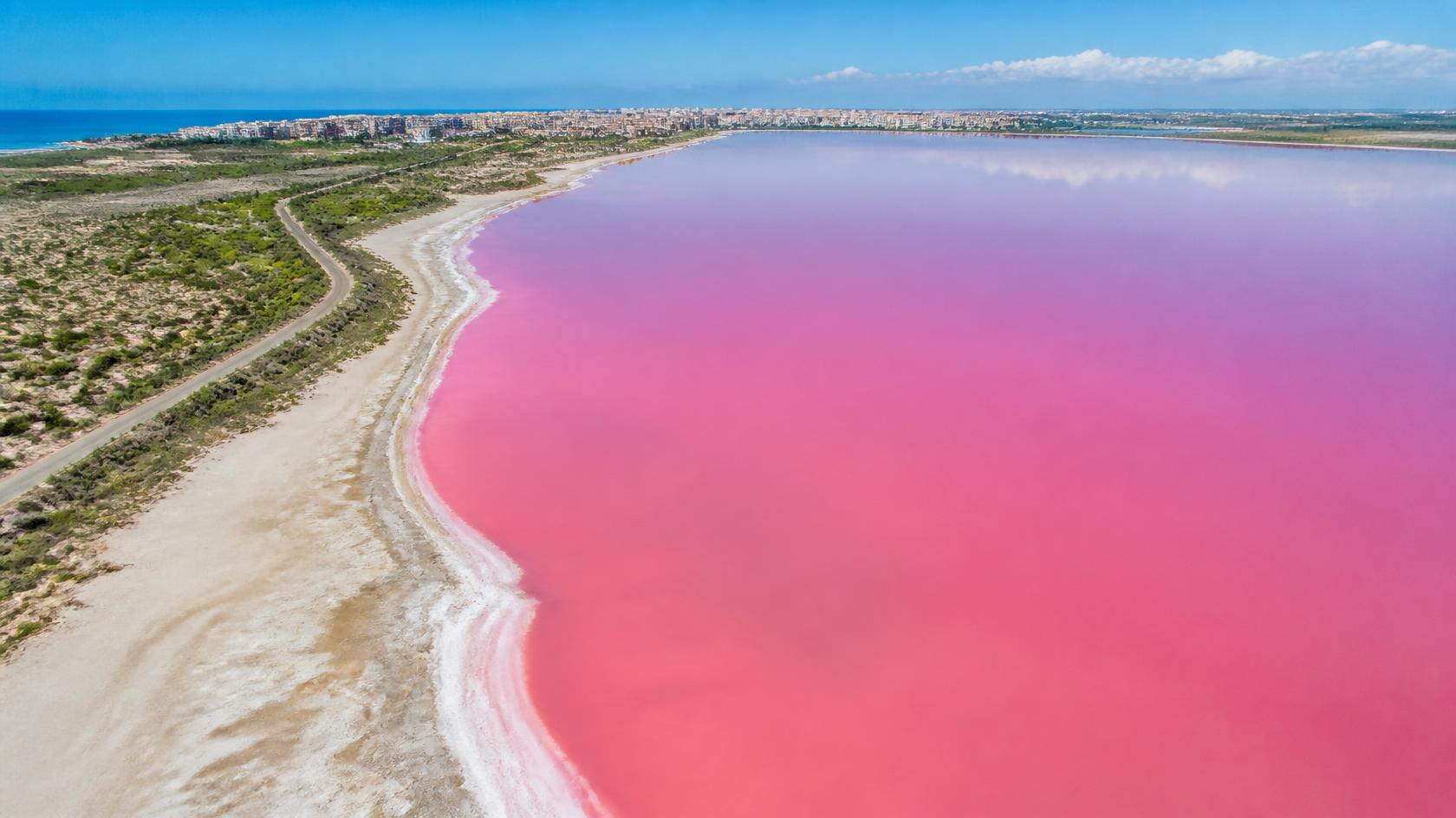
The southern lagoon — the famous pink lake — is the larger of the two and the one most visible from the roads around Torrevieja. Its vivid colour comes from the microalgae Dunaliella salina, which produces beta-carotene pigment in response to the extreme salt concentration and intense sunlight.
The pink colour is most intense from August to October, when temperatures are highest and the water is at its saltiest. In winter and spring the colour fades to pale pink, white, or grey.
Access: The lake itself is not accessible — it is an active industrial salt extraction site. However, the views from the road (N-332) and the official mirador (viewpoint) on the western side are excellent and free.
Best viewpoint: The Mirador de la Laguna Rosa on the western side of the lake, accessible directly from the N-332. Pull-off parking is available. This is the most photographed spot.
👉 Full guide to the pink lake →
Laguna de la Mata: The Natural Lagoon
The northern lagoon — La Mata — is very different from the pink lake. It is a natural brackish lagoon (less salty than Torrevieja), fringed by reedbeds and halophytic vegetation, and surrounded by a network of walking and cycling trails that are open to the public year-round.
This is the heart of the natural park experience. The trail system around La Mata gives you direct access to one of the best birdwatching sites on the Costa Blanca, with close views of flamingos, wading birds, and dozens of migratory species at the right times of year.
Water colour: La Mata does not turn pink like the southern lagoon. Its colour ranges from blue-grey to green depending on the season and the angle of the light.
 Wildlife: What You Can See
The natural park is one of the most biodiverse areas in the province of Alicante. Here is what you’re most likely to encounter:
Flamingos
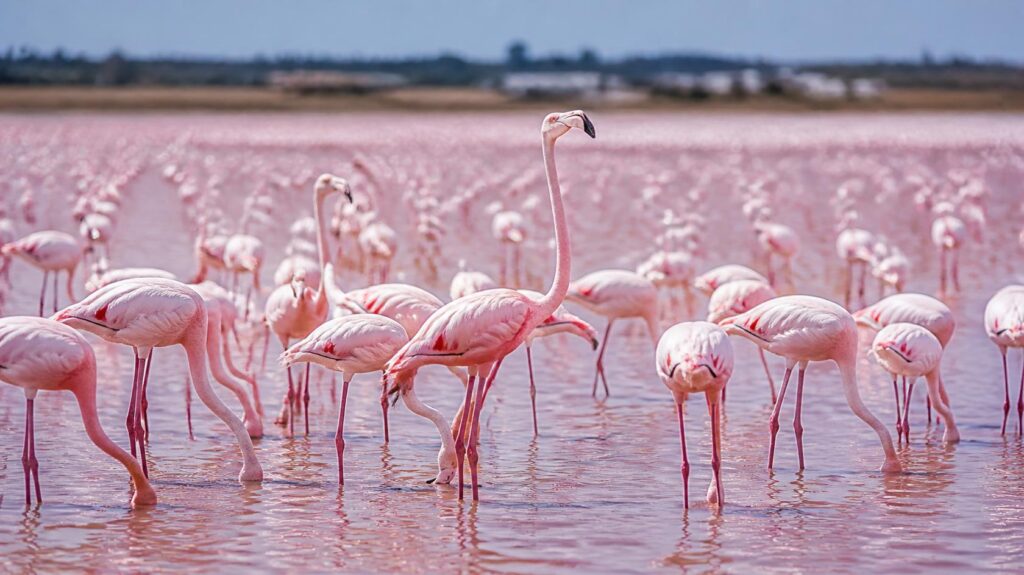
The park’s most iconic residents. Greater flamingos (Phoenicopterus roseus) are present at La Mata year-round, with numbers peaking during spring and autumn migration when hundreds or occasionally thousands gather. They feed in the shallow edges of the lagoon, sieving water for algae and small crustaceans. The pink pigment in their feathers comes from the same beta-carotene in the algae they eat.
Best time to see flamingos: March–May and September–November. In summer and winter, smaller numbers remain year-round.
Best spot: The walking trail on the eastern edge of Laguna de la Mata, particularly near the bird hides.
Other waterbirds
The park hosts an impressive variety of wetland birds throughout the year:
- Avocets — elegant black-and-white waders with upturned bills, present in large numbers
- Black-winged stilts — long-legged waders, highly visible near the water’s edge
- Little egrets and grey herons — common along the canal and lagoon edges
- Marsh harriers — large raptors that hunt low over the reedbeds
- Common terns and little terns — present in summer, diving for fish
- Kentish plovers and little ringed plovers — small waders along the shore
- Cormorants — often seen drying their wings on posts near the water
During migration periods (April–May and August–October), rare species appear regularly. Serious birdwatchers come from across Europe specifically to observe the autumn migration here.
Chameleons
The Parque Natural de las Lagunas de la Mata y Torrevieja has one of the largest populations of common chameleons (Chamaeleo chamaeleon) in Spain. They inhabit the scrubland and pine forest areas of the park, moving slowly through the vegetation and changing colour in response to temperature, light, and mood.
Chameleons are notoriously difficult to spot due to their camouflage, but patient observers on the park trails often find them. They are most active in the mornings and evenings. If you find one, enjoy the observation quietly — do not handle or disturb them.
Other wildlife
- Terrapins — sunning themselves on logs and rocks near the canal
- Rabbits and foxes — common in the scrubland areas, particularly at dusk
- Common wall lizards and large psammodromus lizards — everywhere on warm days
- Seahorses — reportedly present in the canal connecting the two lagoons, though rarely seen
Plant life
The vegetation of the natural park is adapted to the extreme conditions — high salinity, intense heat, and low rainfall. The most striking plants are the halophytes — salt-tolerant species that grow directly in and around the briny water:
- Salicornia (glasswort) — bright green succulent that turns vivid red in autumn, creating a carpet of colour around the lagoon edges
- Arthrocnemum and other salt-marsh plants
- Tamarisks — feathery pink-flowering shrubs along the canal and trails
- The pine forest on the dunes between La Mata lagoon and La Mata beach provides shade and habitat for many bird species
Walking Trails in the Natural Park
The park has several marked trails of varying lengths. All are flat and suitable for most fitness levels.
Trail 1: Laguna de la Mata circuit
The main trail circuits the western and southern edges of Laguna de la Mata. Distance: approximately 8 kilometres for the full circuit, though shorter sections can be walked. The trail passes two bird observation hides with direct views over the lagoon. Surface: compacted earth, suitable for walking shoes (trainers are fine in dry weather).
Trail 2: Canal trail
A shorter, flatter walk along the canal that connects the two lagoons. Good for families with young children. Distance: 2–3 kilometres one way. The canal is a good spot for herons, egrets, and terrapins.
Trail 3: Dune and beach trail
A trail connecting the La Mata lagoon with La Mata beach, passing through the dune system and pine forest. Distance: 1.5 kilometres. Good for combining a nature walk with a beach visit.
Cycling: All the main trails can be cycled. Bikes can be hired in Torrevieja town centre.
The Visitor Centre
The park’s interpretation centre is located in La Mata village, at the northern end of the park. It is free to enter and open most days (check local hours as these vary seasonally).
The centre has exhibits on the ecology of both lagoons, the salt production industry, the park’s wildlife, and the history of the area. It’s a good starting point before heading out on the trails, particularly if you’re visiting with children who will benefit from the context.
Address: Calle Juan Bautista Lafora, La Mata, Torrevieja
Practical Information
Opening: The park trails are open at all times. The visitor centre has set opening hours.
Entry fee: Free. There is no charge to access the trails or viewpoints.
Best time to visit:
- For flamingos: March–May, September–November
- For the pink lake colour: August–October
- For comfortable walking: October–May (summer heat can be intense)
- For autumn plant colour (salicornia turning red): October–November
What to bring:
- Water — there are no drinking water facilities on the trails
- Sun protection — shade is limited on the open lagoon trails
- Binoculars — essential for birdwatching
- Camera with a zoom lens for birds and the pink lake
- Walking shoes or trainers (the trails are not technical)
- Insect repellent in summer, particularly near the canal
Dogs: Dogs are permitted on the trails but must be kept on a lead at all times to protect the wildlife.
Getting there: The park’s main access points are along the N-332 road south of Torrevieja (for the pink lake viewpoint) and via La Mata village (for the Laguna de la Mata trails and visitor centre). La Mata is approximately 10 minutes by car from Torrevieja centre. There is free parking at the visitor centre and near the main trail access points.
Salt Production: A Brief History
The salt lakes of Torrevieja have been exploited commercially for over 2,000 years. The Romans used the salt, and during the 19th century the Torrevieja salt trade expanded dramatically, with ships carrying salt to Cuba, the Americas, and across Europe. The wealth generated by the salt industry funded the construction of much of Torrevieja’s historic architecture.
Today, Salinera Española operates the Laguna de Torrevieja and produces over one million tonnes of salt per year — one of the largest salt operations in Europe. The salt is exported to over 50 countries and used primarily for de-icing roads in northern Europe, food processing, and industrial applications.
The enormous white salt mountains visible from the road viewpoints are not natural formations — they are the accumulated result of each year’s harvest, stored ready for export. At their peak they can reach 30 metres in height.
Frequently Asked Questions
Can you walk around the pink lake? No. The Laguna de Torrevieja is an active industrial site and is fenced off. You can view it from the road viewpoints and the mirador, but walking on the salt flats or approaching the water is prohibited and potentially dangerous.
Can you swim in the salt lakes? No. Both lakes are protected natural areas and swimming is not permitted. For swimming, Torrevieja’s beaches are within minutes. 👉 Torrevieja beaches guide →
Is the natural park good for children? Very much so. The flat trails are easy for children, the flamingos are reliably exciting, and the visitor centre has good interactive displays. The chameleon hunt is a favourite with younger visitors.
Do you need to book to visit? No booking is required for the trails or viewpoints. The visitor centre is free and open to all.
Is the park accessible by public transport? The N-332 viewpoints for the pink lake can be reached by the Alicante-Torrevieja bus, which runs along this road. For La Mata and the walking trails, a car or bicycle is more practical from Torrevieja.
What is the best birdwatching spot in the park? The observation hides on the eastern edge of Laguna de la Mata, reached via the main circuit trail from the visitor centre. Early morning visits give the best light and the most active bird behaviour.